

The two kinds of topics
Setup topics are the themes you picked during setup. FixAEO suggests up to ten from your brand profile, pre-selects five, and lets you type your own. They exist to steer prompt generation. Once your prompts are written, their job is done. Topic clusters are what you see on the Topics page. FixAEO groups your tracked prompts into themes, then reports performance for each theme. These aren’t the same list, and they can drift apart. You might pick “pricing” during setup, then add ten prompts about migrations, and the clusters will grow a migration theme you never named. That drift is visible in the clusters themselves: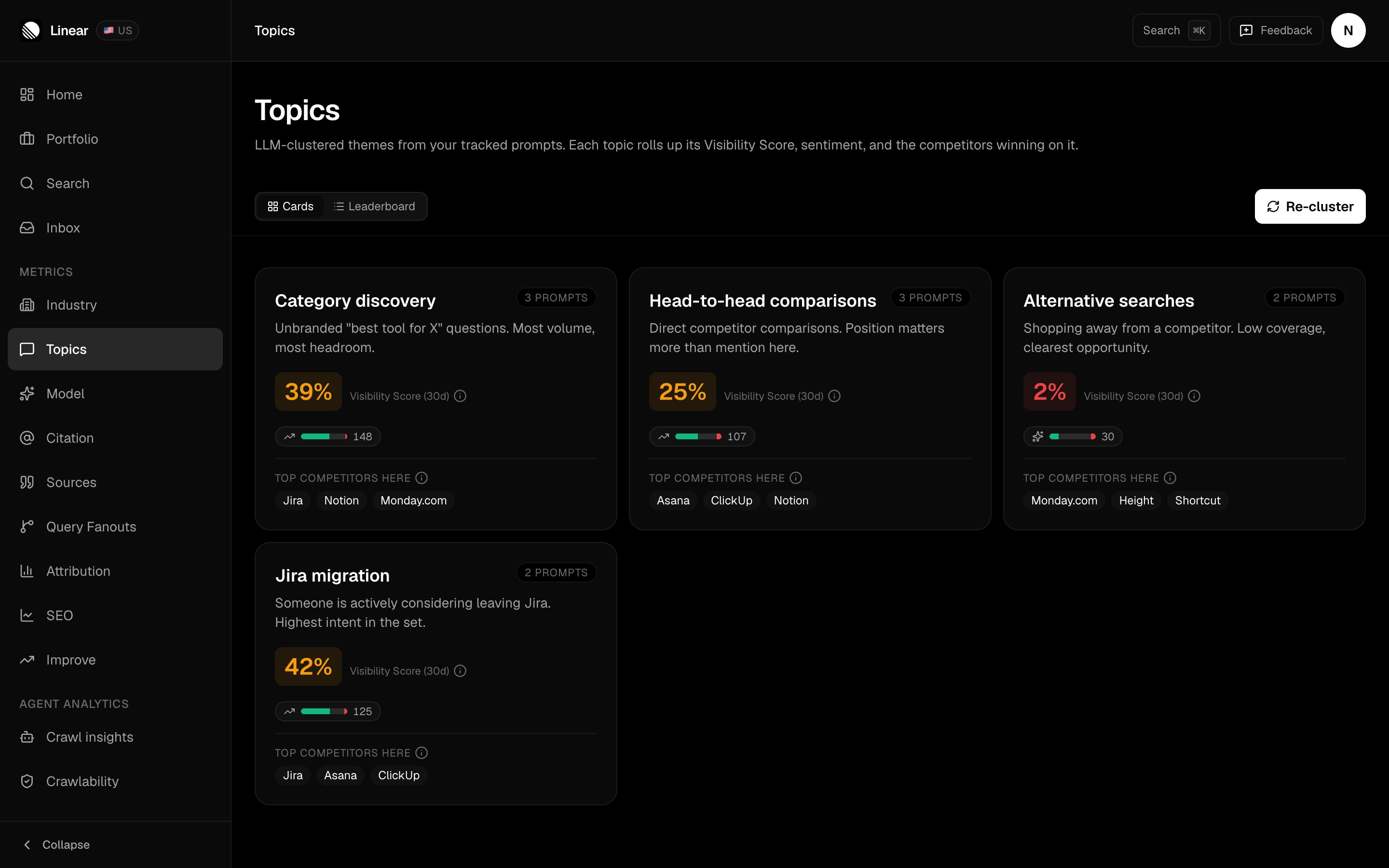
Each cluster carries its own competitor set, so a weak one names the brands to study — Monday.com, Height and Shortcut own Alternative searches.
The Topics page
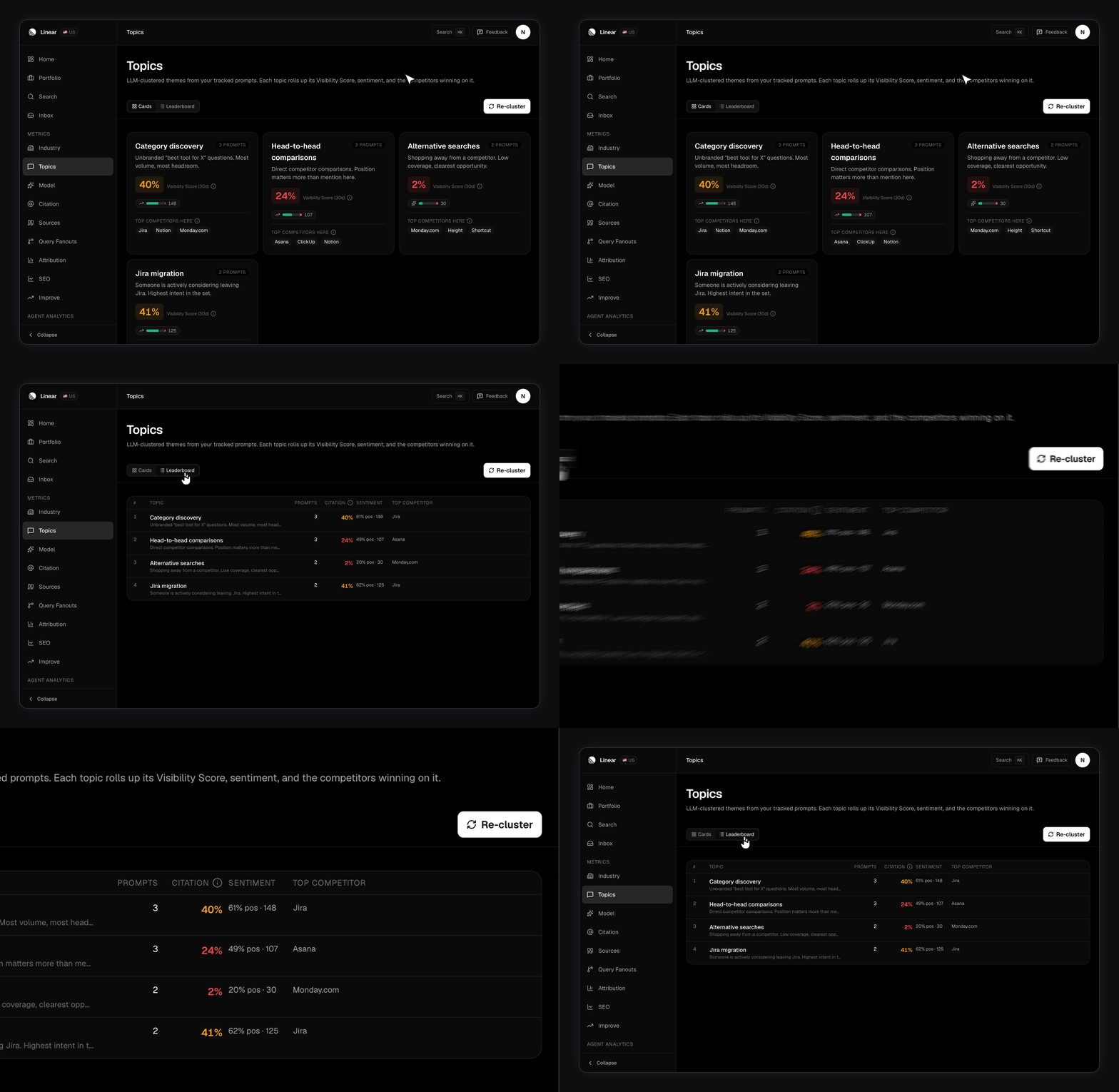
Each cluster tile shows its Visibility Score, its sentiment, and which competitors are winning on it. Two views:- Cards — the default, richer per topic.
- Leaderboard — a ranked table, better when you have a lot of clusters.
Labels: tags and personas
Labels are your own vocabulary for describing prompts. There are two kinds, stored the same way but meant for different cuts:- Tags describe intent. Examples: awareness, purchase intent, support.
- Personas describe audience. Examples: startup founder, enterprise buyer.
A play: find where the category talks without you
Here’s a concrete use for topic clusters. It takes about five minutes.1
Open Topics in Leaderboard view
Switch from Cards to Leaderboard so you can read every cluster at once.
2
Sort by Visibility Score and look at the bottom
Your weakest clusters are the themes where AI models answer your category’s questions and don’t name you. That’s the gap.
3
Ignore clusters built from branded prompts
A cluster full of prompts that name you will score high and tell you nothing about reach. The interesting rows are the non-branded ones. See Setting up your prompts for the difference.
4
Check who wins there instead
Open a weak cluster and read the competitors listed on it. Then go to Citations and filter by that topic to see which domains the models cited when they answered.
5
Decide what to write
You now have a theme you’re losing, the brands beating you, and the specific pages the models trusted. That’s a content brief.
How do you keep a growing list organized?
- Keep your topic count modest. Ten broad themes read better than thirty narrow ones.
- Re-cluster after every batch of new prompts, not every day.
- When a cluster’s name surprises you, that’s a signal, not a bug. Your prompt list has drifted from your brand profile.
- If a theme matters and no cluster covers it, the fix is more prompts, not more topics.
Related
- Setting up your prompts — what to feed the clusters.
- Your brand profile — the upstream context for topic suggestions.
- Tracking competitors — who shows up in the themes you’re losing.